

Publisher at The American Bystander
is Blogmom of Hey Dullblog. His novels and parodies have sold 1.25 million copies in 25 languages. He lives in Santa Monica, CA, and runs The American Bystander all-star print humor magazine.
Latest posts by Michael Gerber (see all)
- The Beatles and “Scenius” - October 2, 2026
- Little Help From Our Friends? - September 2, 2026
- A quick yawp from Mr. History - August 24, 2026

For as long as there are Boomers…
How about this: The Beatles are about the world as it could be. The Stones are about the world as it is.
Convincing?
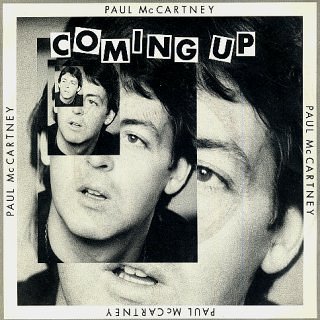
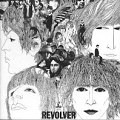


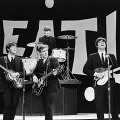
I’ve long felt that their devoted fans would have done anything The Beatles told us to do, that they were uniquely in a position–that is, like no one before or since–to mobilize millions, to act “in concert” to lift the dominant paradigm right up off its foundations and give it the old heave-ho.
I’ve long felt that it is the great tragedy of our generation that the Beatles themselves did not rise to the challenge, but were seduced, like the rest of us, by the siren song of recreational drug use, trapped like insects on flypaper, dazed and confused, distracted, disorganized, complacent.
The Rolling Stones’ complicity in turning us away from idealism and ideology, and toward SEX DRUGS AND ROCK N ROLL!! was certainly a contributing factor in what is and what never was.
“The Stones strike for realism in contrast to the Beatles fantasies” – Jon Landau.
I think there’s a lot to this and also to John Salisbury’s comment. Keep it up everyone!
Just to play Devil’s Advocate to myself: The Stones were a bunch of middle class English kids who fastened onto black Chicago blues as a means of gritty authenticity. In addition to a whiff of “the noble savage,” that kind of gambit has nothing to do with reality, and nothing that comes from it can be totally, 100% real.
The IMAGE of the Stones was as gritty truth-tellers. The IMAGE of the Beatles was as tuneful utopianists. Both were images–ie not reality–but out of the two, I think the Beatles’ image was more authentic.
I think a fun pairing is Beatles v. Kinks; cheeky v. funny; ideal v. real.
Dylan seems to have agreed. You’d think he’d have been more of a Stones guy in the mid-’60s, given all the parallels: wordier, longer, less melodic, angrier, bluesier songs that railed against conventional society & put everyone down in general and women in particular. But he always preferred the Beatles. Going off some stray comments and reading between the lines, I think he felt the Stones were just ripping off Americans like him who could actually do the blues properly (hence ‘bringing it all back home’), whereas the Beatles were unapologetically what they were, i.e. British, and created their own sound. After all, people tend to admire those who do what they *can’t* do, not people who do the same thing with less invention.
Personally, I’m a big fan of the expansive sound of the Big 4 Stones albums from ’68-’72, but when I listen to the early stuff I’m almost at a loss as to how the guys even got off the ground. They got there just a little before the Yardbirds et al, Mick was a good frontman by the standards of the time, and they were aggressively marketed, but on record they just sound like second-rate imitators of singers with more authenticity and much better pipes. (Their mid-’60s stuff continues to be patchy and imitative, they’re just imitating different people.) I’d take ‘Smokestack Lightnin” over the band’s 1963-4 output combined.
“but on record they just sound like second-rate imitators of singers with more authenticity and much better pipes”
This sums up something I’ve been trying to express for a long time.
I ALSO love those Stones albums from 1968-72 — like I love Dylan’s run from 1964-67 — and if that version of the Stones hadn’t existed, there’s be a big hole where they should’ve been. But pre-68, I think they were primarily a way for white middle class kids to enjoy a watered-down version of Chicago blues. And Chicago blues is SO GREAT that the Stones are pretty good. But next to Howlin’ Wolf, Muddy Waters, John Lee Hooker…? C’mon.
Bear in mind that Landau was not a Beatles fan and he didn’t mean it in a complimentary way.
This comment was uttered in the heat of 1968 and its aftermath, with the Stones releasing “Street Fighting Man” (time for violence) against the Beatles’ “Revolution” (destruction, count me out). I always wondered what the commentators of the time meant, exactly, when they extolled the Stones’ “realism,” and if that applied to lines like “I shouted out, who killed the Kennedys, when after all, it was you and me” (“Sympathy for the Devil”). Oh, it was? So in other words, if everybody’s to blame, nobody’s to blame. Great song, but full of shit.
It’s possible that in the context of the time, the Stones’ cynicism (affected or actual) looked enough like realism to be mistaken for it, as opposed to another way of opting out, another species of fantasy.
I cannot recommend the Albert Goldman biography of Elvis enough. It reads like an extended standup routine, hilarious in parts and sad and tragic. His description of the Beatles first meeting with Elvis is amusing. One of my favorite parts of the book is when the Rolling Stones, by some oversight or another, find themselves following James Brown. Flop sweat on Jagger, as his London School of Economics brand of “funk” suddenly comes into sharp relief as an awkward minstrel show.
– Hologram Sam
In other news, plans are being made for a film version of “Buddy Holly Is Alive And Well On Ganymede” starring Jon Heder as Oliver Vale. The producers have offered the part of Buddy Holly to Josh Groban.
Sam, I think that was at the TAMLA Show here in Santa Monica in ’65.
Poor, poor Mick. 🙂