

- Some Thoughts on The Boys of Dungeon Lane - June 3, 2026
- “Hope You Got That” - June 2, 2026
- Quick Housekeeping Note re: Moolah - May 28, 2026

Rejected cover for the White Album. Find out more about it here.
Over on another thread, Anonymous posted the following question, which I thought was meaty enough to merit its own post:
Hey guys, this is way off topic but if you get to it I’d love to hear your thoughts. The White Album was the first major project to use 8 track recording. I’ve recently read somewhere that the engineers were confused about the distinctive sound they produced and went so far as to check the machine. They later discovered it was the solid state mixing board that caused the difference and by Abbey Road had things sorted out. Okay, here’s the question for discussion: Given the different sound output on The Beatles, could it have impacted the negative feelings in the band. If they come back from India, Lennon’s back on drugs and now with Yoko, and they start recording to find radically different – and, I’m guessing, shocking – results, might this have contributed to a sense of frustration, particularly if the engineers kept telling them the machine was working fine? What do you think? Consider, everyone felt good about Abbey Road.
I don’t have any opinion on this—my White-phobia may have made me overlook the recording issues of those LPs. (I do know that Elliott Smith famously tried to recreate the Magical Mystery Tour board in his house here in LA.)
A quick research for this post turned up this great website, called The White Album Project—which yielded the following:
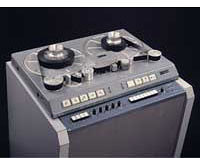
The recorder in question!
The sessions for The Beatles were notable for the band’s formal transition from 4-track to 8-track recording. As work on this album began, Abbey Road Studios possessed, but had yet to install, an 8-track machine that had supposedly been sitting in a storage room for months. This was in accordance with EMI’s policy of testing and customizing new gear, sometimes for months, before putting it into use in the studios. The Beatles recorded Hey Jude and Dear Prudence at Trident Studios in central London, which had an 8-track recorder. When they found out about EMI’s 8-track recorder they insisted on using it, and engineers Ken Scott andDave Harries took the machine (without authorization from the studio chiefs) into the Number 2 recording studio for the group to use.The resulting tracks did not have the same sound as previous Beatles albums had. Thinking that something was wrong with the sound of EMI’s new 3M 8-Track machine (see left), they asked to have a technician check the factory calibration of the machine. The technician using a calibration tape showed the recording engineers that nothing was wrong with the machine, that it was calibrated perfectly to factory standards. The recording engineers were stymied — until they were told by industry professionals that the previous mixing boards at EMI had been valve (USEnglish: tube) powered boards making the earlier Beatles albums sound different. The new mixing boards were the culprit — not the new 3M 8-Track recording machine. It, therefore, took some time before the EMI engineers were able to get the quality of sound they wanted using these transistorized mixing consoles. The EMI engineers were finally able to get the same quality of sound of eariler Beatles albums on Abbey Road.
Related posts:
 The best cover
 White Album Not All That, Writer Claims
 “Revolution 1” In The Head
 Prudence and the Penis: A Mystery
 The White Album, reviewed by Starostin
 10-minute "Revolution"
 Double coverage
A literary White Album
Double coverage
A literary White Album
 More on Lennon and McCartney
 The men from the press say we wish you success
 Everybody’s trying to be my baby
 A Youtube Gem